


You’re writing a sentence and suddenly hesitate: is it knotch or notch? It’s a surprisingly common moment of doubt. English is full of words that sound identical but are spelled differently, and sometimes our brains try to “correct” words that were never wrong in the first place. If you’ve ever paused over these two spellings, you’re not alone.
TLDR: The correct spelling is notch. “Knotch” is a common misspelling influenced by the silent “k” in words like “knot” and “knife.” “Notch” refers to a small cut, indentation, or degree of level, as in “top notch” or “move up a notch.” If you want to be accurate in formal writing, always use notch.
Is It Knotch or Notch?
Let’s settle the question clearly:
- Notch ✅ – Correct spelling
- Knotch ❌ – Incorrect spelling
The correct word is notch, spelled N-O-T-C-H. The version with a “k” at the beginning is not recognized as a standard spelling in English dictionaries.
So why do so many people write “knotch”? The answer lies in the quirks of English spelling.
Why “Knotch” Looks Like It Could Be Right
English contains many words that start with a silent “k,” such as:
- Knot
- Knife
- Knee
- Knock
Because we’re used to seeing “kn” at the beginning of words that have an “n” sound, it feels natural to assume that “notch” might follow the same pattern. After all, knot and not sound different, but the silent “k” pattern is visually familiar.
This mental shortcut leads many people to write knotch when they mean notch. However, “notch” has a completely different linguistic origin and has never included a silent “k.”
What Does “Notch” Mean?
The word notch has a few closely related meanings, all tied to the idea of a cut, indentation, or level.
1. A Small Cut or Indentation
The original meaning of notch refers to a small V-shaped cut or indentation made in an edge or surface.

For example:
- He carved a notch into the stick for each fish he caught.
- There was a small notch in the corner of the table.
Historically, people used notches for counting or marking progress. Shepherds, merchants, and craftsmen would carve small marks into wood or bone to keep track of numbers.
2. A Degree or Level
Over time, the word developed a metaphorical meaning. A notch came to represent a level or step in measurement.
Examples:
- Let’s turn the volume up a notch.
- She improved her performance by several notches.
In this sense, a notch works like a small increment on a dial or scale — something that moves you slightly higher or lower.
3. A High Standard (Top Notch)
One of the most common expressions using the word is top notch.
“Top notch” means something is of the highest quality.
- The service at that hotel is top notch.
- His performance was absolutely top notch.
Here, the image is of the highest mark on a measuring stick — the topmost notch indicating the best level.
The Origin of “Notch”
Understanding the word’s history makes it even clearer why there’s no “k” involved.
“Notch” comes from the Old French word noche, meaning a notch or nick. It entered Middle English as noche or notche, eventually becoming the modern spelling notch.
Notice something important: there was never a “k” at the beginning in its historical forms.
This distinguishes it from words like knot, which come from Old English cnotta, where the “k” (originally pronounced) eventually became silent.
Common Phrases Using “Notch”
To make the spelling stick in your memory, it helps to see the word in familiar phrases.
Move Up a Notch
Means to improve or increase something slightly.
- It’s time to move our marketing strategy up a notch.
Knock It Down a Notch
Means to reduce intensity.
- Please knock the music down a notch.
A Notch Above
Means superior in quality.
- This restaurant is a notch above the others in town.
Notice that even when used in sentences alongside the word “knock,” the word “notch” still does not gain a “k.”
Visualizing a Notch
Sometimes spelling becomes easier when you connect it to a visual image.

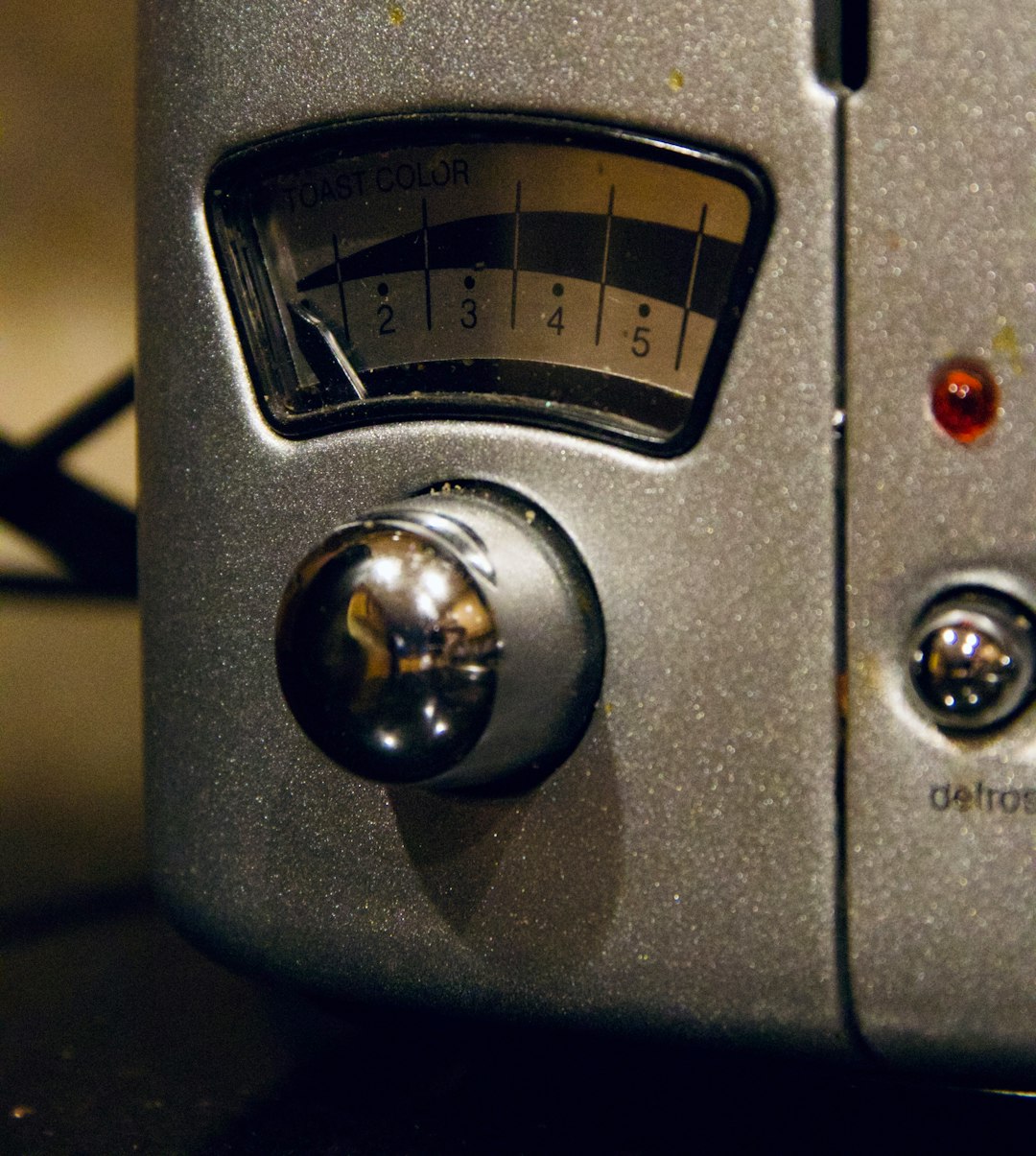
Imagine:
- The small ridges on a volume dial.
- The grooves on a belt.
- The carved marks on a measuring stick.
Each tiny step or cut is a notch. Clean. Simple. No “k” needed.
Why the Confusion Persists
The confusion between “knotch” and “notch” is a classic example of phonetic spelling error mixed with pattern recognition.
Our brains love patterns. When we see:
- knee
- knife
- knot
We unconsciously apply that pattern to new words that start with an “n” sound. Since “notch” sounds similar to “knot,” some writers instinctively insert the silent “k.”
However, English spelling patterns are not always consistent. Just because one word begins with “kn” doesn’t mean all similar-sounding words do.
Is “Knotch” Ever Correct?
In standard English? No.
“Knotch” does not appear in reputable dictionaries as an accepted variant. You might occasionally see it in:
- Typos online
- Informal social media posts
- Creative or stylized brand names
But in formal writing, academic texts, business communication, or professional content, knotch is considered incorrect.
Spelling Trick to Remember It
Here’s an easy memory device:
A notch is a nick.
Both words:
- Start with “n”
- Have no silent “k”
If you associate “notch” with “nick” (another small cut), you’re less likely to add an unnecessary “k.”
Examples in Context
Let’s look at correct versus incorrect usage side by side:
- ✅ She turned the heater up a notch.
- ❌ She turned the heater up a knotch.
- ✅ The quality of his work is top notch.
- ❌ The quality of his work is top knotch.
- ✅ He carved a notch into the wood.
- ❌ He carved a knotch into the wood.
In every case, the version with “k” is simply incorrect.
How Spellcheck Handles It
Most modern spellcheck tools will immediately flag “knotch” as an error. However, autocorrect doesn’t always catch every mistake, especially if:
- You’re typing quickly
- You’ve added custom words to your dictionary
- You’re posting on a platform without spellcheck
That’s why understanding the rule is better than relying entirely on software.
Final Verdict
When it comes to knotch vs. notch, the answer is clear and simple: notch is the only correct spelling.
The confusion arises from English’s many silent “k” words, but “notch” is not one of them. Whether you’re describing a small cut, adjusting the volume, praising something as “top notch,” or talking about incremental improvement, the word always begins with just the letter N.
So next time you pause mid-sentence, wondering whether that silent “k” belongs, you’ll know the answer. Leave it out. Keep it clean. Keep it top notch.